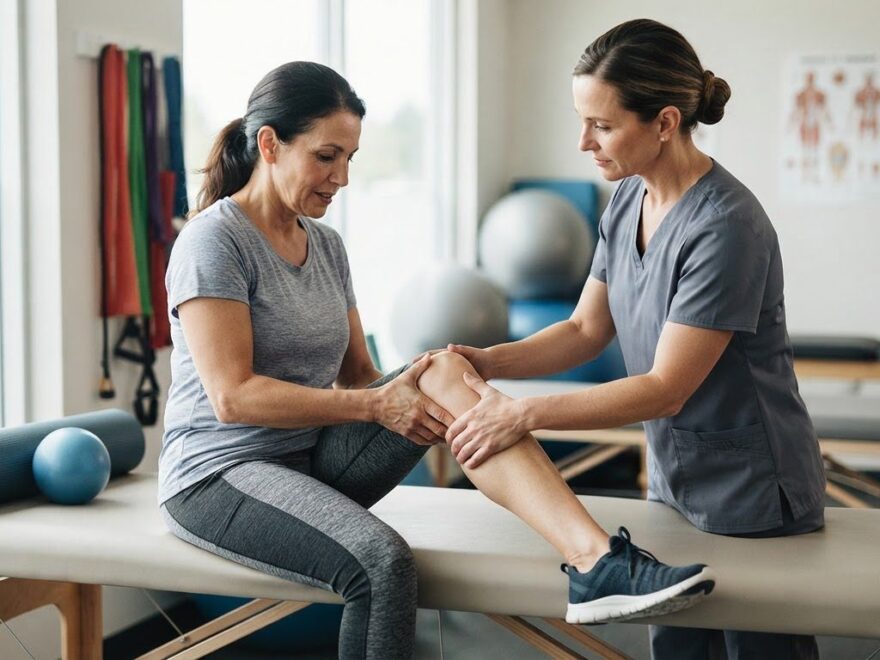
Knee pain is not one condition with one universal fix. An aching knee after activity may reflect overuse, while swelling, instability, or pain that follows an injury can point to a problem requiring a different evaluation. The right treatment depends on where the pain is located, how it began, and what movements make it worse.
Short-lived discomfort often settles with activity modification and basic home care. Persistent or recurring pain deserves closer attention, especially if it changes the way you walk, climb stairs, exercise, or sleep. For people considering conservative care, Knee pain treatment may involve assessing the knee together with the hip, ankle, gait, and surrounding muscles rather than focusing on the painful spot alone.
True Health Chiropractic and Acupuncture describes its approach as an evaluation of strength, stability, joint motion, and whole-body movement. Its True Health Chiropractic and Acupuncture services in Lombard, Illinois, address concerns including meniscus irritation, ligament sprains, runner’s knee, arthritis, tendonitis, IT band problems, and post-surgical stiffness.
First, determine whether the pain is urgent
Most knee pain is not an emergency, but certain symptoms should not be managed solely at home. Seek urgent medical evaluation after major trauma, such as a car accident or severe fall, particularly if you cannot move the knee or leg or suspect a fracture.
Prompt evaluation is also appropriate when the knee is severely swollen, visibly deformed, locked in place, or unable to bear weight. A hot, red, painful joint accompanied by fever can signal infection or another condition requiring immediate care.
For less urgent symptoms, arrange an assessment if:
- Pain persists for more than several days or repeatedly returns.
- Swelling continues despite reducing activity.
- The knee gives way, catches, or feels unstable.
- Pain interferes with ordinary walking, work, exercise, or sleep.
- Symptoms began without an obvious injury and are worsening.
These signs do not identify the cause by themselves. They indicate that guessing at treatment is less appropriate than receiving an examination.
Why knee pain keeps returning
The knee absorbs substantial force during walking, running, jumping, squatting, and stair climbing. Pain can develop when tissues are injured, irritated, inflamed, or exposed to more load than they can currently tolerate.
Common contributors include:
- Overuse: A sudden increase in running, lifting, sports practice, or repetitive work can irritate tendons and other structures.
- Patellofemoral pain, often called runner’s knee: Discomfort around or behind the kneecap commonly worsens with stairs, squats, or prolonged sitting.
- Tendon irritation: Tendonitis can produce localized pain during movements that load the affected tendon.
- Meniscus irritation or injury: A meniscus problem may be associated with joint-line pain, catching, or swelling.
- Ligament sprains: A forceful twist or impact can affect knee stability.
- Arthritis: Wear-related or inflammatory joint changes may cause stiffness, aching, and reduced mobility.
- IT band problems: Irritation on the outside of the knee is often linked with repetitive activity and movement mechanics.
The location offers clues but is not a diagnosis. Pain in the front, side, back, or inside of the knee can arise from more than one condition. Hip weakness, restricted ankle motion, an altered gait, or an old injury can also change how forces travel through the leg.
What to do during the first few days
For a mild, recent flare-up, temporarily reduce the activity that provokes symptoms. Rest does not necessarily mean complete inactivity. Gentle movement within a comfortable range can help prevent stiffness, but pushing through sharp pain, increasing swelling, or instability is counterproductive.
Ice can reduce discomfort for some acute injuries. Use a cloth barrier rather than placing ice directly on the skin, and stop if the skin becomes numb or painful. Compression and elevation may also help with swelling, provided a wrap is not tight enough to cause tingling, discoloration, or increased pain.
Over-the-counter medicines can be useful for selected adults. Acetaminophen may help with pain, while nonsteroidal anti-inflammatory drugs such as ibuprofen or naproxen can reduce pain and inflammation. These medicines are not suitable for everyone. NSAIDs can pose risks for people with a history of stomach ulcers or bleeding, kidney disease, certain cardiovascular conditions, or medication interactions. Follow the product label and ask a clinician or pharmacist if you are unsure. Do not combine products containing the same active ingredient.
If symptoms are not clearly improving, home care should transition to an examination rather than becoming an indefinite routine.
Treatment options depend on the diagnosis
Movement rehabilitation
Physical or rehabilitative therapy often focuses on restoring the capacity of the muscles and joint rather than simply avoiding pain. A program may address quadriceps and hip strength, flexibility, balance, control during single-leg activity, and gradual return to the movements that matter to you.
Exercises should match the condition and current tolerance. A useful exercise for one person can aggravate another, particularly when swelling, a ligament injury, or a surgical recovery is involved. Pain that steadily intensifies during exercise, produces new swelling, or persists well after the session is a reason to modify the plan and seek guidance.
Activity and load changes
Temporary substitutions can keep you active while reducing knee stress. Depending on the symptoms, lower-impact exercise may be better tolerated than running or jumping. Adjusting training volume, footwear, surface, lifting technique, or recovery time can matter as much as the exercise itself.
Weight management can also reduce mechanical demand on the knee for people carrying excess body weight. It should be approached as a health strategy, not as a judgment about the cause of pain.
Bracing and supportive equipment
A brace may provide external stability or alter how forces are distributed across the joint. Its usefulness depends on the underlying problem and proper fit. A brace should not replace strengthening or evaluation when the knee repeatedly buckles, nor should it be worn so tightly that circulation or sensation changes.
Medication and injections
Clinicians may recommend topical or oral medication, depending on the diagnosis and a person’s medical history. In selected cases, injections such as corticosteroids are used to address inflammation. Other injection approaches, including platelet-rich plasma, are offered in some orthopedic settings, but evidence and suitability vary by condition.
Injections do not correct every source of knee pain. Their risks, expected duration of benefit, and alternatives should be discussed with the qualified professional providing them.
Surgery and specialist referral
Many knee problems improve without surgery, but conservative care is not the right endpoint for every injury. A referral to an orthopedic or other medical specialist may be appropriate for suspected fracture, major ligament damage, a locked knee, persistent instability, advanced arthritis, or symptoms that fail to respond to a well-designed nonsurgical plan.
Imaging is not automatically necessary for every episode of knee pain. A clinician decides whether X-ray, MRI, or another test is useful based on the history and physical examination.
How a whole-body evaluation can fit into care
A knee is part of a connected movement system. Limited ankle mobility can change how the leg absorbs force. Reduced hip strength can affect knee alignment during stairs or single-leg tasks. An old injury can alter gait long after the original pain has faded.
That does not mean every knee problem originates elsewhere. The knee itself still needs careful assessment. A useful evaluation considers both local findings—such as swelling, tenderness, range of motion, and stability—and the way the hip, ankle, foot, and trunk contribute to movement.
True Health Chiropractic and Acupuncture states that its first visit includes discussion of the person’s history and the activities knee pain is limiting, followed by assessment of strength, stability, and joint motion. A treatment plan should be explained clearly, including what is being treated, which activities to change, and how progress will be judged.
Exercises and habits to approach carefully
Avoid movements that consistently produce sharp pain, marked swelling, buckling, or a catching sensation. High-impact activity, deep squats, kneeling, twisting, and downhill walking may need temporary modification, but the correct restriction depends on the diagnosis.
Complete avoidance of movement for long periods can lead to stiffness and deconditioning. Instead, use a graded approach:
- Identify the specific movement or workload that triggers symptoms.
- Reduce its intensity, range, frequency, or duration.
- Substitute a better-tolerated activity.
- Reintroduce the provoking movement gradually as strength and control improve.
Do not use exercise to test whether an unstable or acutely injured knee is “strong enough.” Get evaluated first when the knee gives way, swells rapidly, or followed a significant injury.
A practical plan for getting back to normal activity
Start by recording when the pain appears, where it is located, whether swelling occurs, and which activities change it. This information helps distinguish a one-time flare from a recurring mechanical pattern.
Next, reduce aggravating load without abandoning all movement. Use symptom-guided activity, protect the knee after an acute injury, and avoid self-prescribing medication if you have relevant medical conditions or take interacting drugs.
If the problem continues, seek an examination that leads to a specific plan. The goal is not simply to make the knee feel better for a few hours. Effective knee pain treatment should address the suspected source, rebuild tolerance, and help you return safely to walking, training, work, or recreation.